The Unexpected Path to Raising Thinkers in an AI World: When Information Isn’t Enough
Why formation—not information—must shape the next generation.
Can I be honest with you about something? Back in 2019, when I was deep in my doctoral work at Baylor, writing a philosophy of education paper and thinking about the future of schooling, I had no idea I'd end up here—launching a classical Christian homeschool co-op with my own kids as my classroom.
Life has a way of doing that, doesn't it? You make all these plans, do all the “things” (for me write all these papers about transformative education while still working in sales in the building materials industry) and then you become a homeschool mom trying to figure out whether your kindergartner should do Saxon or Singapore Math.
But here's what's wild: when I recently dug up that old philosophy paper that I hadn’t looked at in years, I was stunned. Everything I wrote about education needing radical transformation, about balancing the classics with real-world preparation, about preparing kids for a world that doesn’t exist and how they need to learn how to think rather than just what to memorize… it's all come full circle in the most unexpected way.
What I Believed Then (The Academic Version)
In that 2019 paper, I argued that education needs to sit in this beautiful tension between perennialism (teaching the timeless classics, the great works, the foundational knowledge) and progressivism (preparing students for an ever-changing, innovation-driven world).
I wrote: "I believe you cannot get to where you want to go (preparation for an ever-changing society) without first knowing how you got there (perennial conserving society, nationalism). How do you know what your interests are if you do not have a background sufficient enough to provide a pipeline of ideas?"
Basically, I believed we needed to teach the classics—the history, the great books, the foundational knowledge, while also teaching kids how to think critically, solve problems, and innovate in a world that's changing faster than we can keep up with.
I just had no idea I'd be doing it in a one-room co-op with five-year-olds learning Latin and studying timelines while my own kids sat cross-legged on the floor.
And Then AI Changed Everything
I
f you're a parent (or teacher) in 2026, you know exactly what I mean. ChatGPT, AI writing assistants, and automated problem‑solving tools are everywhere. A teenager can snap a photo of their math worksheet and get every step solved instantly. They can ask a chatbot to write their essay, summarize the novel they never read, translate their Spanish homework, or even generate a polished college admissions essay in seconds.
And here's the uncomfortable truth: most of what traditional schools still emphasize, such as multiple‑choice tests, formulaic writing templates, and procedural drills that reward quick answers over deep thinking, machines now do faster, cleaner, and more consistently than humans.
In my paper seven years ago, I warned that "educators are preparing students for a world that will not exist in twenty years." I wrote that before I knew about ChatGPT. Before I saw AI tools grading essays, writing code, and designing lesson plans.
Turns out, that timeline was even shorter than I expected.
What Machines Can't Do (And What Our Kids Desperately Need)
So, if AI can solve math problems and write essays, what should we be teaching our kids?
This is where classical Christian education becomes not just beautiful, but essential.
Machines can't:
• Discern truth from lies in a world drowning in information
• Develop virtue and character in the face of moral complexity
• Understand the human story through history and recognize patterns that shape our future
• Engage in the great conversation across centuries about goodness, truth, and beauty
• Lead with wisdom born from deep knowledge of how we got here
• Love God and neighbor with a heart formed by Scripture and worship
This is what I was writing about in 2019 without even knowing the full weight of it: formation over information. Critical thinking with discernment over mechanical skills. Wisdom over data processing.
Why Cornerstone Exists
When I started Cornerstone Classical Collaborative, I wanted to create the education I wrote about in that paper but with one major addition I didn't fully articulate back then: with Christ as the cornerstone.
Because here's what I've learned as a mom: you can teach a child how to think. You can teach them to love the good, the true, and the beautiful. You can equip them with knowledge of history and the skills to solve problems.
But if they don't know why … if they don't have a foundation in Christ that tells them they are loved, known, and created for a purpose, then all that knowledge is just... information. And we already have too much of that.
Once you know the Source of truth, the pursuit of knowledge stops feeling random or fragmented. It becomes ordered, purposeful, and deeply human. With Christ at the center, our academic choices aren’t then arbitrary, they are intentional and rooted in a desire to understand God’s world and our place in it.
At Cornerstone, we study Early Modern History this year (the 1550s-1850s) not because it's on a standardized test, but because understanding the Reformation, the scientific revolution, and the founding of our nation … these things shape how we see the world today.
We learn Latin not to ace a college entrance exam, but because language shapes thought, and understanding the roots of our language helps us think more clearly.
We gather for worship, Scripture, and hymns not as a religious "add-on," but because formation of the soul is the entire point.
And we do it together. Parents and kids, multi-ages, learning side-by-side. In 2019, I wrote about cross-functional collaboration and the "it takes a village" approach. Turns out, that's exactly how classical education has always worked.
Why We're Done With Endless Math Worksheets
Your child does not need to do multiplication problems every night.
I know, I know, that maybe sounds radical. But hear me out.
One of my favorite things to study during my MBA was innovation constraints. Things like individual constraints, social constraints, technological constraints, etc. are the things that prevent systems from changing even when they desperately need to. One of the biggest constraints in education is that we keep doing what we've always done because we're afraid of what happens if we stop.
But here's the thing: mechanical repetition (the kind of work that makes kids zone out and hate learning) is exactly the kind of work artificial intelligence excels at. You want your kid to be able to compute 7 x 8? Great. But a calculator (or a chatbot) can do that faster and more accurately.
What your child does need is to understand why multiplication works. To see patterns. To ask questions. To apply mathematical thinking to real problems. To develop the kind of logical, ordered mind that can tackle challenges that don't have a worksheet answer key.
That's why at Cornerstone; we focus on understanding over volume. Depth over breadth. Wonder over drudgery.
What This Actually Looks Like
Here's what a typical week at Cornerstone might look like:
We gather on Monday and Wednesday mornings. We start with worship and prayer. We dive into Story of the World and talk about what was happening in the 1600s—not just names and dates, but why it matters. We learn Latin phrases and see how they connect to English words we use every day. We do hands-on science experiments that make kids gasp with delight. We memorize timeline cards not as busy work, but as anchors in the great story of human history.
And then kids go home and live with what they've learned. They read more. They ask questions. They make connections. They don't cram for tests or fill out endless worksheets. They think. They talk. They debate.
Because that's what the future needs: thinkers, not test-takers.
For the Mom Who's Worried (I Get It)
Maybe you're reading this and thinking: "But what about college? What about test scores? What if my kid falls behind?"
I hear you. I really do. Those fears are real.
But let me ask you this: What does it profit a child to gain the whole world of standardized test scores but lose their love of learning? To be "ahead" in math but have no idea why it matters? To get into a great college but have no foundation for understanding the worlds fallacies and finding truth in a world full of lies?
Malcolm Gladwell did an episode back in June 2019 on his podcast Revisionist History regarding his research on law students. It has stuck with me since then. He found that the ones who scored highest on the LSAT weren't necessarily the best lawyers. Gladwell argues that the LSAT rewards “hares”, the fast processors who can sprint through timed puzzles, while overlooking the “tortoises,” the slower, more deliberate thinkers who actually excel in real legal work, including at the Supreme Court. He shows that the highest‑performing clerks and legal minds are almost always tortoises: people who take time to wrestle with truth, nuance, and complexity. His critique exposes how modern education often rewards scores and grades rather than wisdom, mistaking test‑taking agility for genuine intellectual depth.
The idea that getting everyone to the same place is a virtue really represents a limitation on our aspirations.
Your child doesn't need to be on the same page as everyone else. They need to be formed into the person God created them to be; with a mind that can think, a heart that can discern, and a soul anchored in truth.
The World Our Kids Will Inherit
Here's what keeps me up at night: our kids are inheriting a world where information is infinite, truth is contested, and moral clarity is seen as oppressive.
They'll be able to ask AI to write their papers, solve their problems, and answer their questions. But AI can't tell them what's worth writing about. It can't teach them to love what's good. It can't form their character or give them a vision for a life worth living.
That's our job. And frankly, it's too important to outsource to a system that's still operating like it's 1985.
Here's What Gives Me Hope

In 2019, I wrote that paper feeling frustrated that education wasn't changing fast enough. I was looking at innovation from the outside, theorizing about what could be.
Now? I'm living it. And you know what? It's working.
I see kids who are excited to learn. Who asks questions that make me pause and think. Who makes connections across subjects that blow my mind. Who are being formed (slowly, gently, intentionally) into people who love God, love learning, and have the tools to navigate whatever world they inherit.
That's the vision. That's Cornerstone.
Here's My Invitation
If you're tired of the hamster wheel of worksheets and test prep...
If you're worried about raising kids in a world where truth seems fluid and meaning seems lost...
If you want something more for your kids than just checking boxes and keeping up with benchmarks...
Come see what we're building at Cornerstone.
We're preparing kids for a world that doesn't yet exist—not by chasing trends or teaching to tests, but by anchoring them in what's timeless. By teaching them to think, to discern, to love truth, and to know the God who holds it all together.
It turns out my doctoral paper wasn't just academic theory. It was a blueprint for what I'd end up creating with my own hands, in a co-op full of kids learning Latin and memorizing timeline cards and falling in love with the story of how we got here.
And honestly? I wouldn't have it any other way.
With hope for the future,
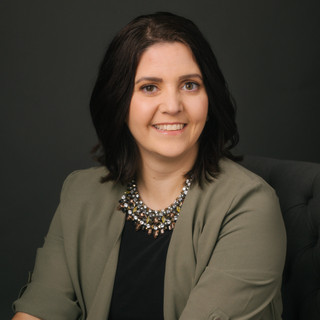
Dr. Melanie Bisson
Founder, Cornerstone Classical Collaborative

P.S. Want to see what this looks like in person? Come to one of our Preview in the Park events this spring. Bring your questions, bring your doubts, bring your kids. Let's talk about what education could be—not someday, but right now, for your family. Visit our website for dates and details.

Comments